Nampa · Canyon County · Treasure Valley
Pest Control in Nampa, Idaho
Railroad blocks, canal-side yards and new streets at the farm edge
- Reviewed by a licensed Idaho pest professional
Nampa began as a stop on the Oregon Short Line in 1883. It grew into a rail junction, then a farm center, and today it is one of Idaho’s fastest-growing cities. Canals dug in the 1890s still carry water past backyards. The Union Pacific main line still runs through town. New subdivisions now sit beside fields that are still farmed.
Those layers decide which pests reach a Nampa house and when. These pages explain what you are likely seeing and how licensed professionals approach it. They are not a substitute for licensed professional work.
Nampa Pest Guide is an independent, educational site that covers Nampa only. It does not sell or apply treatments. Describe what you are seeing and request a free quote. Requests are passed to a licensed local provider.
Jump to a common pest
- 120,384Nampa residents, Census Bureau estimate for July 1, 2025
- 1891The Town of Nampa incorporated on April 17
- 11Pest guides focused on Nampa homes, yards and parks
Free, no obligation
Get a free quote
Describe what you are seeing and request a free quote. Requests are passed to a licensed local provider.
Your request is shared with a licensed local provider, so they can reply. This guide does not sell your information. Disclosure
What drives pests here
Five things that set Nampa’s pest pattern
Weather matters, but in Nampa much of the story is history on the ground. The list below covers five of those layers:
- A railroad town that kept growing
- Canals that made dry land farmable
- A downtown rebuilt after a fire
- A large park and a creek that hold water
- Long road corridors where new houses meet working land
From a junction town of about 800 to a city past 120,000
In 1900 Nampa had about 800 people and roughly ten passenger trains a day. The 2020 Census counted 100,200 residents. The Census Bureau’s estimate for July 1, 2025 is 120,384 (QuickFacts).
Much of that growth landed on former fields. Many new rooftops now stand within sight of working farmland, the Amalgamated Sugar factory (built in 1942 and still running) and the Union Pacific main line. Where lawns meet crop ground, rail ballast and storage yards, mice, rats and crickets have short trips to a garage door.
A downtown rebuilt after 1909, still set on the rail diagonal
On July 3, 1909, a firecracker set off a fire in a wood-frame cigar store. The fire destroyed the block between 12th and 13th Avenues and 1st and Front Streets, and downtown was rebuilt afterward (City of Nampa history).
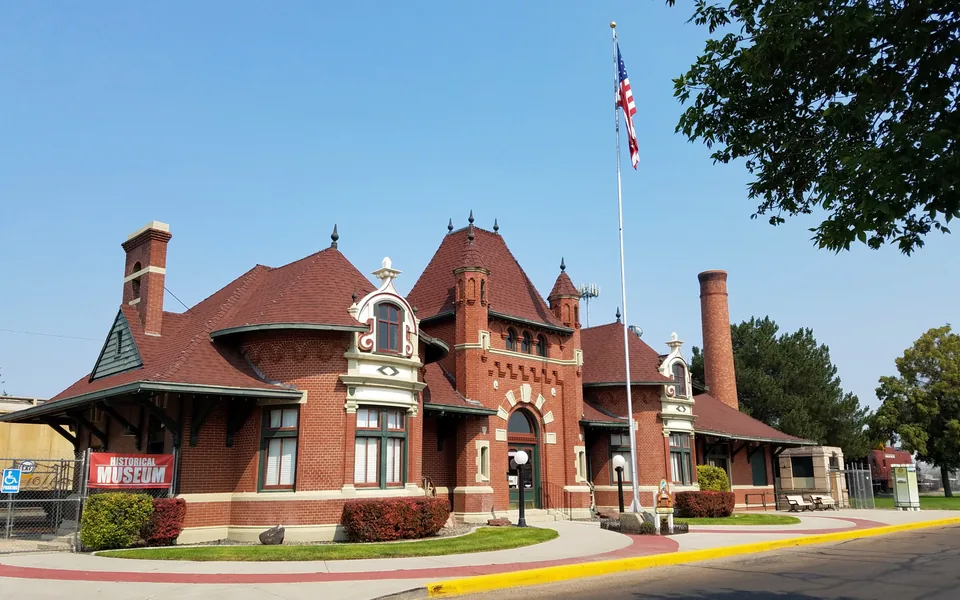
The historic grid still follows the railroad’s northwest-southeast line around the 1903 depot at 12th Avenue and Front Street and Library Square. The depot is now the Canyon County Historical Society and Museum. Older masonry, shared walls, basements and utility openings give pests more ways in than a newer slab does. Market days and events add food and trash to the mix.
Canals and laterals that turned sagebrush into farms
The Phyllis Canal brought water to the Nampa area during the 1890 season, and the Ridenbaugh Canal extension was finished in 1891. The city’s published history credits those canals with opening an estimated 150,000 to 300,000 acres next to Nampa for farming.
After 1909, Deer Flat Reservoir, now usually called Lake Lowell, added stored water for Canyon County farms, and it still serves them. Laterals still cross neighborhoods and edge-of-town ground. They keep soil damp through the growing season, which suits millipedes, pill bugs, ants and rodents until the water is shut off in fall.
Lakeview Park and Indian Creek
Lakeview Park, near Garrity Boulevard and 16th Avenue, is Nampa’s largest park. The City Council named and purchased it in 1924, after an irrigation reservoir called Lake Ethel was drained. Today it has a pond, rose garden, picnic shelters, a playground and a pool.
Indian Creek also runs through the Nampa area. Standing and moving water, shade, picnic food and trash cans give wasps, flies and rodents more to work with than a typical backyard. Homes nearby can notice the difference.
Long corridors, one county, one health district
Interstate 84 runs along the northeast side of town, with Garrity Boulevard and Idaho Center Boulevard near the freeway. Midland Boulevard carries traffic north and south, and 12th Avenue runs through downtown and south of it. On the west side are Caldwell Boulevard and Karcher Road, near the mall that opened in 1965. To the south, Happy Valley Road and Greenhurst Road lead toward remaining farmland.
Each corridor mixes housing with commercial, industrial or farm uses, so pest pressure shifts from one side of town to another. All of it is in Canyon County, where Southwest District Health is the public health agency.
Pest guides
Eleven guides for Nampa homes, yards and outbuildings
Each guide opens with where that pest tends to turn up in Nampa. It then covers how to tell what you have, what public agencies and university sources say about it, and how licensed professionals usually handle it. These are reference pages, not treatment instructions.
- SpidersBlack widows, hobo spiders and the harmless kinds that gather in sheds and window wells.Open the guide
- AntsPavement and odorous house ants drawn to damp beds and kitchen counters.Open the guide
- MiceFall arrivals from harvested fields, and the deer mouse link to hantavirus.Open the guide
- RatsNorway rats along canal banks, rail ground and backyard feed or compost.Open the guide
- Wasps and hornetsYellowjackets, paper wasps and hornets whose nests swell under eaves as summer wears on.Open the guide
- CricketsField crickets that leave cooling fields for garages and window wells.Open the guide
- Boxelder bugsRed-and-black clusters on south and west walls as autumn sets in.Open the guide
- Millipedes and pill bugsDamp-ground crawlers that follow lateral water and soaked flower beds.Open the guide
- FliesFruit flies in kitchens, house flies near trash and animals, and cluster flies in attics.Open the guide
- Pantry pests and beetlesIndian meal moths and small beetles in flour, cereal and pet food.Open the guide
- Fleas and ticksFleas carried in by pets, and ticks from tall grass along ditches and creek edges.Open the guide
Get help
Ready for a professional to take a look?
Recommended local provider
ProGuard Pest Control
Nampa Pest Guide is an independent educational site, not a pest control company. ProGuard Pest Control is the licensed provider this guide recommends for Nampa homes.
- Local, family and veteran owned
- Licensed and insured
- Family and pet safe
- Free quote
- Serves Nampa, Idaho
Questions to ask any pest company
Whoever you hire, check three things first:
- The applicator holds a current Idaho license.
- The company can show proof of insurance.
- The treatment plan, and what it covers, is in writing.
The Nampa hiring checklist walks through each step and points to the Idaho State Department of Agriculture license lookup. It also explains Nampa’s peddler rules if a salesperson is already on your porch.
Common questions
Short answers to common Nampa questions
These answers rely on the same city, Census and agency sources cited in the longer guides. You’ll find more on the FAQ page.
Why do so many Nampa pest problems trace back to farms and canals?
Nampa was built on irrigated farmland, and much of that land is still farmed or was farmed until recently. Canal laterals keep soil damp through the growing season. Harvest and colder nights in fall push mice and crickets out of fields and toward houses, shops and garages. Homes at the edge of town, near Happy Valley Road or Greenhurst Road for example, often notice this first.
Which part of the year tends to be busiest?
Activity usually follows two turning points.
- Irrigation season: while water runs in the canals, moisture pests and ants stay active, and wasp nests keep growing through summer.
- Fall: once the water is shut off and nights cool, boxelder bugs, cluster flies, crickets and mice look for shelter indoors.
The seasonal calendar goes month by month.
A pest control salesperson knocked on my door. What does Nampa require?
Under Nampa City Code Title 5, Chapter 5, door-to-door solicitors need a city license and must wear the city-issued Peddler Permit Badge. You can ask to see it.
The code also says a solicitor must:
- Stop once you say you are not interested
- Stay off property posted “No peddlers” or “No solicitation”
- Not misrepresent who they work for
The chapter does not set knocking hours. The City of Nampa publishes a list of approved door-to-door solicitors.
What happens when I ask for a quote?
Fill out the Get a free quote form. Say what you are seeing, where on the property, and roughly when it started. Your request is shared with a licensed local provider, so they can reply. This guide does not sell your information.
Sources
- U.S. Census Bureau, QuickFacts: Nampa city, Idaho
- City of Nampa, History of Nampa
- City of Nampa, Downtown Nampa
- City of Nampa, parks information, including Lakeview Park
- National Weather Service, Local Climate of the Treasure Valley (figures are for the valley’s official station, not a Nampa gauge)
- Nampa City Code, Title 5, Chapter 5, Peddlers and Solicitors
- City of Nampa, Approved Door-to-Door Solicitors
Each link points to the city, agency or federal record that supports the fact it accompanies.
Need help with a pest in Nampa?
Describe what you are seeing and request a free quote. Requests are passed to a licensed local provider.